

- Quick delivery and free return within 14 days
This site uses cookies for analytics and to improve your experience. By clicking Accept, you consent to our use of cookies. Learn more in our privacy policy.
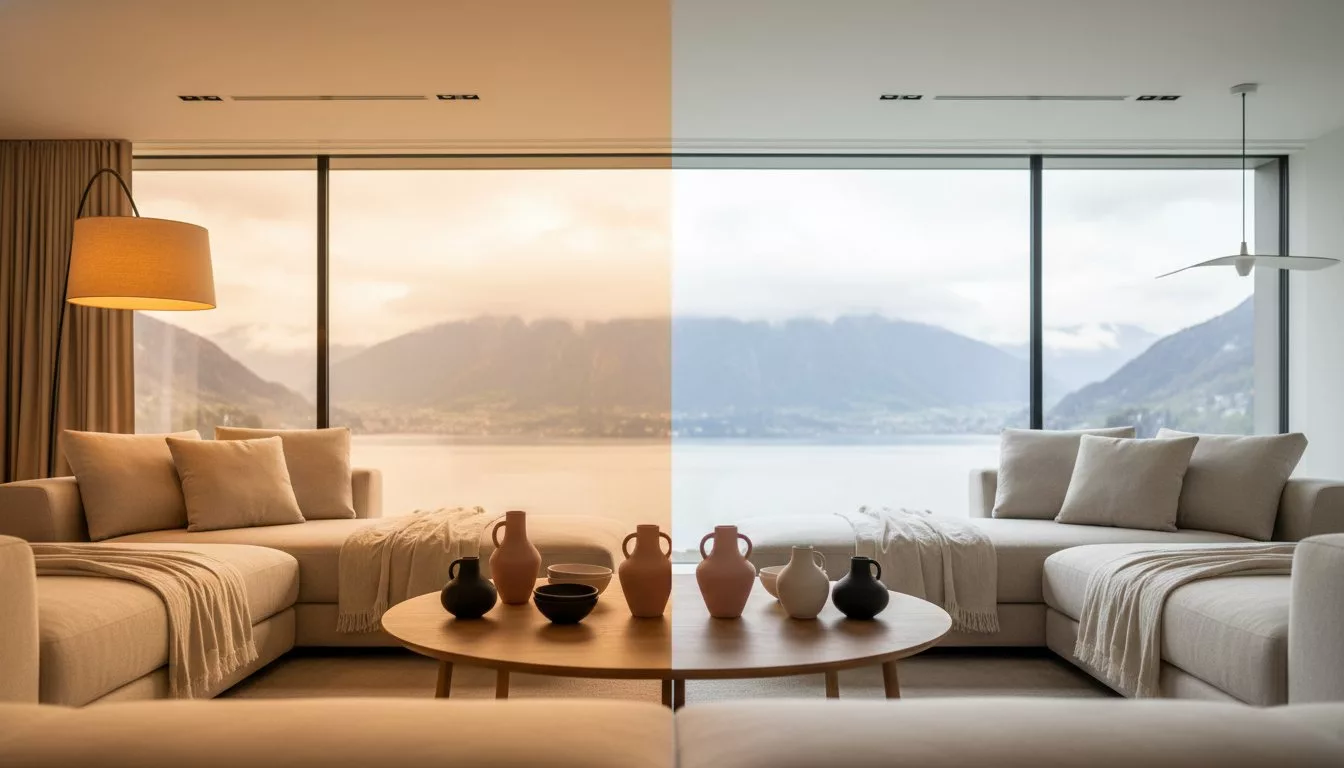
Have you ever experienced the sensation of entering a room and suddenly feeling uncomfortable, without being able to explain why? Often the answer does not lie in the furnishings, but in the invisible luminous fabric that envelops every object. The choice between warm or cool lighting is not simply a technical matter related to Kelvin degrees, but the profound secret to defining the soul of your home and protecting the vibrant beauty of natural materials. We know well how frustrating it can be to find yourself faced with endless options without knowing which will transform your space into a haven of peace or which, on the contrary, will render the natural warmth of linen rigid.
We share your desire for harmony and the fear of extinguishing the atmosphere of a space with the wrong choice. In this guide, we will accompany you in creating a sanctuary of wellness, revealing how to select the ideal temperature for each room according to principles of elegance and current regulations such as UNI/TS 11826:2021. You will discover how to balance aesthetics and functionality, exploring the new trends of 2026 to bring to life an environment that is not only illuminated, but that fully reflects your life philosophy and refined taste.
Light is not a simple technical accessory, but the silent breath of every room. We often focus on the shape of a chandelier or the design of a lamp, forgetting that the very essence of atmosphere lies in the tone of the luminous beam. Choosing between warm or cool lighting means deciding which emotion we want to experience when crossing the threshold of home. It is an invisible dialogue that transforms a cold physical space into a welcoming haven, capable of embracing us after a long day. Once we were limited by the amber warmth of old incandescent bulbs, but the evolution toward LED technology has given us unprecedented creative freedom, allowing us to sculpt every corner with sartorial precision.
To navigate this choice, one must look at color temperature, expressed in Kelvin degrees (K). Imagine this scale as the story of a sunny day. The lower values, between 2000K and 3000K, evoke the golden light of sunset or the reassuring flame of a candle. As the number rises, the light becomes whiter and then bluish, recalling the clear midday sky. When you observe bulb packaging in stores, look for this number. It is your reference point for maintaining domestic balance. Natural light remains our constant ideal, and it is precisely by drawing inspiration from it that we can choose elements of home decor that shine with authentic and timeless beauty.
Our body responds to light in a profound and instinctive way. Warm tones promote the release of melatonin, preparing the mind and heart for evening rest. Conversely, a cooler tone stimulates concentration and activity, making it ideal for moments when we need energy and clarity. Creating a domestic sanctuary means knowing how to alternate these frequencies with awareness. Choosing the right warm or cool lighting serves not only to illuminate an object, but to support our circadian rhythm. Well-calibrated light protects our mood and transforms every environment into a mirror of our life philosophy, where wellness is not a luxury, but a pleasant daily habit. To learn more about mastering the art of light layering and using lighting to create atmosphere in every room, you may explore our guide dedicated to this sensory approach.
Choosing the correct lighting means painting the atmosphere of one’s home with brushstrokes of temperature and intensity. It is not only a technical decision between warm or cool lighting, but about understanding how each nuance interacts with spaces and with our daily feelings. Light is the element that transforms a room into a sensory experience, defining the boundaries between the energy of day and the quiet of evening. By exploring these three macro-categories, we can learn to balance functionality with aesthetics, creating an environment that faithfully reflects our personality and our desire for harmony.
Warm light, ranging between 2700K and 3000K, is the soul of welcome. It is that amber tone reminiscent of sunset light or the reassuring glow of scented candles. This temperature is ideal for enhancing the natural materials we love, such as linen and wood, as it brings out their textures and organic nuances. Imagine returning home and finding a reading corner illuminated by an artisanal designer table lamp; the warm light envelops the cushions and fabrics, immediately inviting relaxation. It is the priority choice for areas dedicated to conviviality and rest, where intimacy becomes the absolute value to protect.
Often underestimated, neutral light around 4000K represents the perfect balance for contemporary design. Many experts offer valuable lighting design advice emphasizing how this tone is the best ally for maintaining color fidelity. Unlike warm or cool lighting, neutral light does not alter the natural colors of furnishings and artworks, making it ideal for private galleries or for enhancing the refined details of your home decor. It combines the clarity necessary for daily activities with a visual cleanliness that is never aggressive.
At the opposite pole we find cool light, which exceeds 5000K and shifts toward blue tones. Although it is essential where visual precision is vital, such as in a laundry area or in certain technical corners of the kitchen, it must be used with extreme care in living spaces to avoid making the environment impersonal. Elegance lies in the ability to layer these options, creating a harmonious dialogue between different light sources. If you desire dedicated consultation to sculpt the luminous soul of your dwelling, you can always contact us personally for tailored guidance.
Every environment in our dwelling possesses its own vocation, an inner rhythm that light has the task of supporting and enhancing. The choice between warm or cool lighting should not be experienced as a technical obligation, but as a precious opportunity to define the profound identity of each space. Imagine your home as a symphony. If the living room requires sweet and enveloping notes, the kitchen needs clearer and more precise passages. Creating harmony means knowing how to dose these intensities, avoiding the common mistake of flat and uniform lighting that would deprive rooms of their natural emotional depth and discreet charm.
In the living room and bedroom, the absolute priority is creating a nest of softness. In these spaces, the secret lies in luminous layering. Instead of relying on a single central light source, which often proves too invasive and impersonal, we suggest incorporating several artisanal design table lamps. These elements are not merely simple light sources, but true sculptures that define corners of quiet and reflection. Avoid direct and cool lights above the sofa or bed. Prefer amber tones that invite profound relaxation. In Switzerland, where natural light possesses an almost silvery clarity, it is essential that artificial sources be calibrated to complement twilight, prolonging that sensation of peace that only a lovingly curated environment can offer.
Moving to more functional environments, the challenge is to combine efficiency with style without breaking the enchantment of the overall atmosphere. In the kitchen, the work surface requires neutral light to ensure safety and precision during meal preparation. However, above the dining table, it is essential to return to warmer tones so as not to cool the pleasure of conviviality. Even in the bathroom, the thoughtful choice between warm or cool lighting plays a crucial role. Around the mirror, neutral light is ideal for not altering the natural tones of the skin, but it must be diffused to avoid harsh shadows that would make the atmosphere too rigid. The use of dimming becomes a precious ally here. Being able to lower the light intensity transforms a functional bathroom into a small private spa, where light becomes soft to accompany an end-of-day wellness ritual. Entryways and corridors also deserve attention. A luminous welcome consistent with the rest of the home is the first step in making your guests feel truly welcomed into a sanctuary of beauty and serenity.
Light is not an isolated entity. It is a fluid element that takes shape only when it encounters the matter surrounding us. When we design the soul of a room, we must ask ourselves how our home decor will respond to the luminous touch. Every surface, from the irregular grain of a linen runner to the glossy glaze of handmade ceramics, possesses its own chromatic voice. Consciously choosing between warm or cool lighting means deciding whether we want to enhance the vibrant naturalness of these materials or whether we prefer a more aseptic and detached rendering. Beauty lies in the sensory dialogue between what we see and what we can almost touch with our gaze, creating a synergy that transforms the dwelling into a living work of art.
Linen is the beating heart of our life philosophy and our curation. Being a natural and porous fiber, it possesses a unique capacity to absorb and diffuse light, creating a visual softness that has no equal. Raw fibers require light that enhances their purity without flattening them. Grazing light, perhaps coming from a laterally positioned lamp, creates a suggestive “scrub” effect on precious fabrics. This play of light shadows highlights the authentic texture of linen, celebrating those small imperfections that make it noble. There exists a profound continuity between the clothing we wear and the environment surrounding us. A linen garment shines with a different light when it moves in an environment illuminated with warmth and care, reflecting a sense of freedom and timeless grace.
Artisanal ceramics, with their textured surfaces and never-identical reflections, benefit enormously from warm accent lighting. An amber tone glides gently over the curves of a vase or bowl, emphasizing the artisan’s manual work and the purity of the clay. In this context, the use of diffusers in natural materials helps soften shadows, avoiding overly sharp contrasts that could prove aggressive to the eye. It is essential to choose designer table lamps that are true art objects, capable of furnishing and inspiring even when turned off. The color of walls also plays a determining role in light reflection. A dark wall will absorb much of the temperature, requiring an even more thoughtful choice between warm or cool lighting to avoid making the space oppressive. If you wish to discover how to harmonize your spaces with perfect lighting, we invite you to contact us for a personalized consultation at our concept store.
For us at Lighthouse Locarno, the home is not a simple physical space, but the most intimate reflection of our soul and a sanctuary where we rediscover peace. Sculpting the atmosphere of an environment means going beyond mere illumination; it means composing a symphony of sensations that embrace sight, touch, and smell. The choice between warm or cool lighting is the first step in defining this wellness ecosystem. We firmly believe that every object you bring into your dwelling must have a story to tell and a quality capable of defying time, privileging the excellence of Made in Italy and the purity of natural materials that we select with passion and expertise.
Our curation stems from the desire to accompany you on an aesthetic journey that unites women’s fashion with interior decoration, following a single thread of timeless beauty. In this scenario, light never acts alone. To complete the sensory experience of a room, it is essential to pair the light temperature with a fragrance that enhances its vibrations. Our reed diffusers are designed precisely for this: while warm light softens contours, the fragrance diffuses with discretion, creating perfect harmony. We are here to offer you dedicated consultation, treating you as special guests in our boutique, to help you decide how warm or cool lighting can interact with your artisanal ceramics or your beloved linen fabrics.
Choosing with care means honoring one’s daily life. We invite each of our clients to slow down, to observe how light changes during the hours of the day, and to imagine how every small change can influence one’s mood. Our vision of “Home & Life Philosophy” celebrates the authenticity and discreet luxury of an environment that welcomes us with warmth. It is not about following fleeting trends, but about building a conscious lifestyle where every lamp and every accessory are chosen to last and to inspire. Beauty is a daily choice. It requires attention. If you feel the desire to renew your spaces and want to find your next inspiration, we invite you to explore our online shop. You will find a curated selection of objects that, illuminated by the right tone, will transform your home into a true haven of elegance and serenity.
We have embarked on a journey through color temperature, discovering how lighting is not a simple technical detail, but the profound breath of every environment. Knowing how to consciously choose between warm or cool lighting and understanding their magical dialogue with noble materials, such as linen and artisanal ceramics, allows you to transform every room into a true sanctuary of peace. Our proposal stems from an exclusive Made in Italy selection, where artisanal attention to detail harmoniously blends with a life philosophy oriented toward sustainability and beauty that does not fade with the passage of time.
We invite you to consider light as a living element, capable of evolving alongside your desires and daily emotions. If you feel the need for an expert touch to harmonize your spaces and create that refined atmosphere you have always dreamed of, we are here to guide you with dedication and passion toward the ideal choice. Discover also our complete guide on how to use lighting to create atmosphere and transform every corner of your home into a sanctuary of well-being. Explore our collection of lamps and home fragrances and be inspired by our vision of mindful lifestyle. Your new haven of well-being awaits you, ready to shine with an authentic, warm, and deeply personal light.
Warm light is generally less fatiguing for the eyes in domestic environments, especially during evening hours. Amber tones promote ocular relaxation and naturally prepare the body for rest. Conversely, very intense cool light can cause dryness and fatigue if used for long periods dedicated to relaxation. For activities requiring much concentration, neutral light remains the best compromise to avoid excessive strain.
Mixing warm or cool lighting randomly is not recommended because it creates a visual contrast that breaks the aesthetic harmony of the room. However, it is possible to layer temperatures for different but well-defined purposes. You can use hidden neutral light for work surfaces and warm light for the convivial area. The important thing is that the main light sources maintain chromatic consistency to avoid generating a disorderly and poorly curated effect.
The natural light of the sun constantly changes, ranging from 2000K at dawn to 6000K at clear midday. To achieve an effect similar to zenithal daylight at home, bulbs between 4000K and 5000K are usually chosen. These tones reproduce the clarity of the open sky without shifting excessively toward blue. It remains a purely functional choice, often reserved for offices or service areas where visual clarity is the priority requirement.
Warm light between 2700K and 3000K is the ideal choice to bring out the intrinsic warmth of wood and its fibers. This tone enhances the golden and reddish grain of the material, making the furniture more alive, deep, and welcoming. Cool light would tend to extinguish the natural colors of wood, giving it a grayish or artificial appearance that would deprive the piece of its material soul and artisanal charm.
Modern LED technology is perfectly capable of replicating the enveloping warmth of old incandescent bulbs. Look for models labeled “Warm White” or “Extra Warm,” with values between 2200K and 2700K. For an excellent result, verify that the color rendering index (CRI) is above 90. This ensures that the colors of your furnishings and linen fabrics appear vibrant and authentic as under candlelight.
White walls act as a reflective surface that takes on the tone of the chosen light source. Warm light will give walls a cream or ivory reflection, making the environment more intimate and visually soft. Cool light will shift white toward bluish or gray nuances, creating a more sterile and clinical atmosphere. If your goal is to maintain a pure white faithful to the original, neutral light at 4000K represents the most suitable technical solution.

True elegance is never measured by the number of silver utensils, but by the soul you manage to infuse into every detail of your home. Often, the…
Elegance is never a matter of rigid measurements, but of how a fabric manages to breathe together with the wearer. It is often thought that…