
- Quick delivery and free return within 14 days
This site uses cookies for analytics and to improve your experience. By clicking Accept, you consent to our use of cookies. Learn more in our privacy policy.
A linen table runner is not a simple table accessory, but a living fabric that holds the warmth of your most cherished dinners and the stories of an entire lifetime. Dear friend, I perfectly understand that moment of hesitation before a wine stain or the uncertainty between hand washing and machine washing; the fear of damaging such a precious and artisanal fiber is a feeling we deeply share. In this guide dedicated to how to wash linen table runners and napkins, I wish to accompany you on a journey where linen care becomes a ritual of pure well-being for your home.
You will learn to treat your fabrics with gentle and sustainable methods that preserve their beauty for generations, staying updated on international ISO 3758:2023 standards and the new 2026 European regulations regarding the biodegradability of detergents. Together, we will explore the secrets to removing the most stubborn stains and the fundamental steps to obtain fibers that are increasingly soft to the touch, ensuring a timeless elegance for your table that respects the environment and the purity of the raw material. Linen is an investment in enduring beauty, and treating it with awareness means honoring the craftsmanship that makes every moment of conviviality unique.
The table is the beating heart of every home, the sacred place where bonds are strengthened and daily stories take shape between a glass of wine and a sincere smile. Choosing linen for these moments means embracing a philosophy of life that celebrates nature, slowness, and durability over time. Linen (fabric) is one of the oldest and noblest fibers in the world, appreciated not only for its refined aesthetics but also for a natural resistance that defies decades. Unlike synthetic alternatives that deteriorate quickly, linen is a living material that evolves with you, becoming a silent witness to your most cherished conviviality.
At Lighthouse Locarno, with our deep dedication to quality and well-being, we firmly believe that every object should contribute to transforming your home into a sanctuary of serenity. Investing in artisanal runners and napkins is not a simple purchase, but a conscious choice of sustainability that respects the rhythms of the planet. These fabrics require far fewer water resources during production compared to cotton and are completely biodegradable. Learning how to wash linen table runners and napkins correctly allows you to honor this ethical choice, keeping intact that imperfect beauty made of small irregularities in the weave that make each piece unique and deeply human.
Artisanal linen is immediately distinguished by touch for its rich consistency, its freshness, and that elegant drape that only expert hands can bestow. While industrial products often undergo heavy chemical treatments to appear uniform, pure linen maintains a material purity that enhances its sensory texture. It is fundamental to learn to read maintenance labels carefully, following international ISO 3758:2023 standards, to ensure that the fiber is not damaged. A quality product requires specific and delicate care, but in return, it offers a sense of discreet luxury that no synthetic material can ever hope to replicate.
One of the most fascinating aspects of this fiber is its extraordinary ability to improve with time and use. Washing performed with wisdom and awareness does not wear out the fabric; on the contrary, it gradually softens the fibers, making them increasingly pleasant and silky against the skin. This constant care transforms your table linen into a true investment for the future, capable of being passed down as a precious family memory that smells of home. The same dedication we reserve for table accessories is found in our selection of pure linen clothing, where natural elegance blends perfectly with the practicality of modern life. Caring for linen means taking care of the very atmosphere of your life, making every meal a special occasion celebrated with grace, balance, and authenticity.
Taking care of your fabrics is an act of respect toward the craftsmanship and history that each piece carries with it. Understanding how to wash linen table runners and napkins requires an approach that prioritizes delicacy over brute force, transforming maintenance into a ritual of preservation. Before proceeding, take a moment to prepare the linens. Always separate white items from natural or colored ones; linen has a high absorption capacity and could capture pigments released by other fabrics. If you notice recent stains, pre-treat them with a touch of neutral soap, dabbing gently instead of rubbing vigorously.
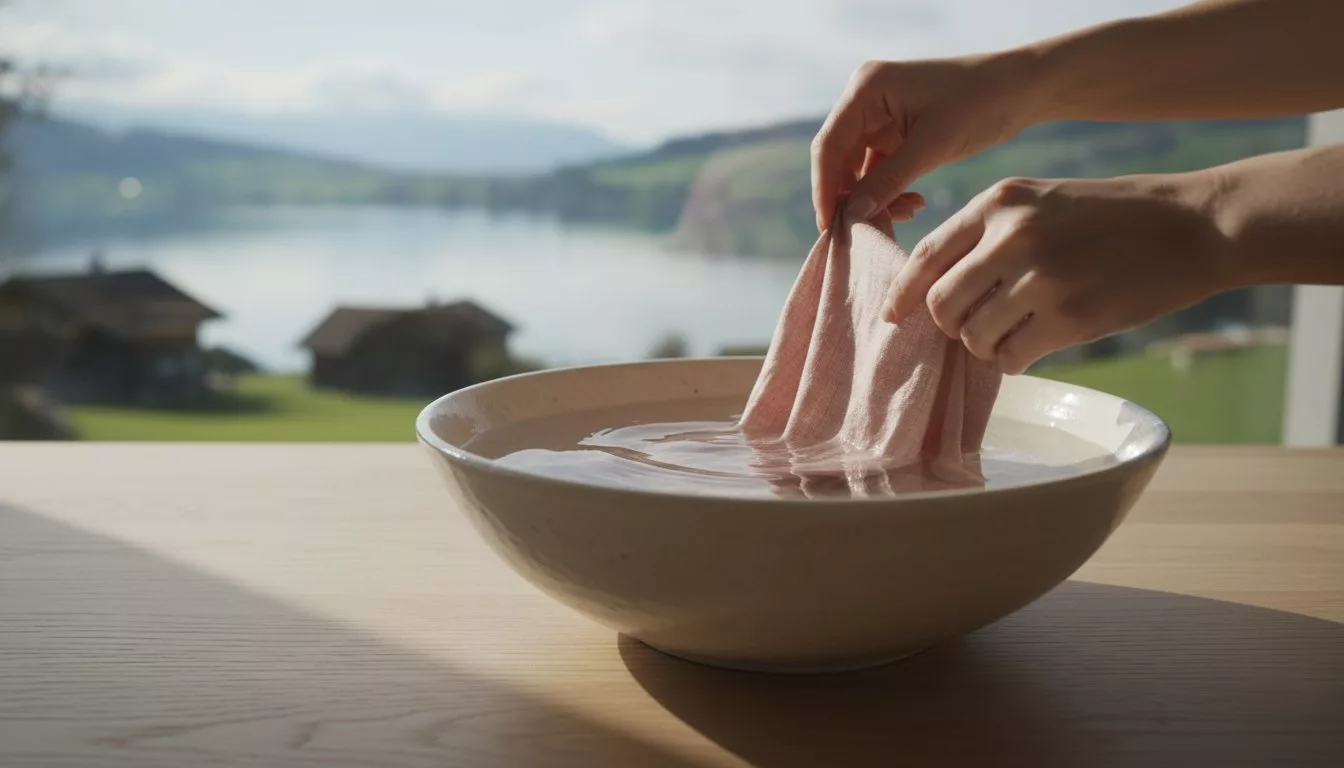
The choice of detergent represents the heart of the care. I suggest you always opt for liquid and neutral formulas, preferably free of optical brighteners. These chemicals, although they promise a brilliant white, act by depositing on the fibers and can, over time, alter the original shade of natural or yarn-dyed linen, making it dull or yellowed. For the most precious pieces, perhaps inherited or enriched with hand embroidery, manual washing in a basin with lukewarm water remains the safest choice to preserve every single stitch.
Excessive heat is the main enemy of linen’s dimensional stability. For your runners and napkins, the ideal temperature should never exceed 40 degrees Celsius. While optical white linen can tolerate slightly higher temperatures in case of stubborn dirt, 40 degrees represents the perfect limit to sanitize without causing thermal shock. Boiling water is not necessary for daily cleaning; on the contrary, high temperatures can set protein stains and make the fibers stiff. Keeping the water lukewarm ensures that the fabric maintains its natural elasticity and does not undergo unwanted shrinkage that could compromise the shape of the runner on your table.
The spin phase is where you risk stressing the fabric structure the most. To protect the integrity of the fibers, set the washing machine to a delicate cycle and limit the spin to 400 or a maximum of 600 rpm. A reduced speed prevents the formation of deep and permanent wrinkles, greatly facilitating subsequent ironing. If your napkins feature hemstitching, fringes, or lace details, using mesh bags is a small secret that makes a difference. Finally, avoid overloading the drum. Linen needs space to move and breathe; only then can water and soap flow freely through the weave, ensuring a deep and uniform clean. If you would like specific advice for a particularly delicate item in your collection, contact us for a personalized consultation.
A dinner with friends or a lunch with family are moments of pure joy, but it is natural that conviviality brings some small mishaps. A drop of wine or a sauce mark should not scare you, however. The golden rule for preserving the beauty of your linens is timeliness. Acting while the stain is still fresh allows you to dissolve the dirt before it binds deeply to the porous fibers of the linen. Knowing how to wash linen table runners and napkins also means mastering these small gestures of first aid that save your mise en place without resorting to aggressive chemicals.
For dreaded red wine stains, an ancient but always effective remedy consists of immediately pouring sparkling water on the affected area, then covering it with a generous layer of fine salt. The salt will act as a natural sponge, drawing the colored pigment to itself, while the carbon dioxide in the water will help lift the particles from the weave. If, instead, the problem is grease or fat from a sauce, pure Marseille soap is your best ally. Slightly dampen the bar and rub it gently on the dry stain before proceeding with the usual wash. For wax residues from your scented candles, first let the wax harden completely; then, remove the excess with a teaspoon and place a sheet of absorbent paper above and below the stain, passing an iron at a very low temperature to melt and absorb the greasy residues.
Forget traditional bleach. This substance is too aggressive for natural fibers and, paradoxically, tends to yellow white linen over time, making it fragile and prone to tearing. To restore brightness to your items, rely on sodium percarbonate. Added to a 40-degree wash, it releases active oxygen that sanitizes and whitens in an ecological way. If you wish to keep the fibers elastic and soft without using industrial softeners, try a solution of citric acid in the final rinse compartment; it is a simple secret that respects nature and the skin.
Organic fruit or tomato stains respond beautifully to the combined action of lemon juice and sunlight. Apply a few drops of lemon to the stain and leave the fabric exposed to direct sunlight for a few hours; nature will act as a natural and delicate bleach. If, on the other hand, an accidental ink mark should stain your precious Made in Italy linen table runner, dab the area with cold milk, changing it as soon as it becomes colored, until the mark completely disappears. These small precautions will allow you to enjoy your table with serenity, knowing that every mark can be removed with love and wisdom.
The care ritual does not end with the last rinse; the drying and ironing phase is the moment when the fiber regains its shape and reveals all its luminosity. Once you have understood how to wash linen table runners and napkins, it is fundamental to avoid undoing the benefits of a delicate wash with aggressive drying. Open air and natural light remain the best allies for this fabric. Laying the items out in the shade, preferably horizontally or hung with care, allows the fibers to relax naturally, capturing that freshness typical of breezy days on the shores of our Lake Maggiore.
The use of the dryer, although convenient, often represents a threat to the longevity of artisanal linens. Intense heat and prolonged mechanical friction can make the fibers fragile, leading to a loss of elasticity and, over time, the appearance of small tears. If you absolutely cannot do without it, use a very short cycle at a low temperature, removing the runners when they are still quite damp. Remember that linen loves moisture; it is the secret to keeping the fiber strong and ready for ironing that enhances its nobility effortlessly.
Ironing linen does not have to be a tiring task. The trick lies in the timing: pass the iron when the fabric is still noticeably damp to the touch. In this state, the fibers are more malleable and the creases smooth out with surprising ease, allowing you to obtain a professional result without having to resort to extreme temperatures that could burn the fabric. Use a steam iron set to the specific linen function and always iron on the reverse side, especially for runners in dark or natural tones; this simple precaution avoids the appearance of that unsightly shiny effect and protects the intensity of the colors over time. To explore every aspect of this technique, our guide on how to iron linen will accompany you step by step through a professional care ritual for always perfect garments.
Storing linens with love is the final act of this journey of beauty. Avoid folding runners and napkins too tightly or pressed; a soft fold prevents the formation of permanent marks that could weaken the weave. It is essential to avoid plastic containers or airtight boxes that prevent air circulation, favoring instead the use of cotton bags or simply letting the fabrics breathe on wooden shelves. For a sensory experience that welcomes you every time you open the wardrobe, add small bags of lavender or natural essences. If you wish to learn more about choosing the best materials for your home, contact us for a dedicated consultation.
Finally, embrace the elegance of spontaneity. In contemporary style, a slight ripple in the linen is not a defect, but a distinctive sign of authenticity and value. Letting your napkins maintain that wavy and natural texture communicates a sense of welcome and relaxed refinement, perfect for a table that celebrates real life beyond formal perfection.
The beauty of a well-set table does not end with the impeccable cleanliness of its fabrics; it lies in the subtle balance between material, light, and intention. After carefully learning how to wash linen table runners and napkins to preserve their artisanal soul, the next step is the art of coordination. At Lighthouse Locarno, we consider the table as a blank canvas on which to paint moments of authentic gratitude. Pairing your fabrics with handmade artisanal ceramics and soft atmospheric lighting transforms a simple meal into a complete sensory experience, capable of nourishing not only the body but also the spirit.
Every piece in our collection is the result of passionate research guided by Michela Pagliuca, who personally selects every item to ensure it meets criteria of material purity and timeless design. Our Home & Life philosophy is based on the idea that Italian quality and sustainability must coexist harmoniously in everyday life. Choosing a high-quality runner means surrounding yourself with objects that tell a story of excellence, making your home a welcoming refuge where every detail is cared for with love and professional expertise.
To further elevate the atmosphere of your dining room, we suggest exploring the concept of sensory layering. The clean and natural scent of freshly washed linen can be enhanced and complemented by carefully chosen room fragrances. Placing Reed Diffusers with delicate and natural notes near the convivial area helps define the boundaries of a sanctuary of well-being. This attention to invisible details creates a deep emotional bond between the guest and the space, making every encounter unforgettable and imbued with a refined serenity.
We believe that every home deserves a unique signature, a mirror of the personality of those who inhabit it. For this reason, we do not limit ourselves to offering products, but invite you to experience a personalized consultation. If you are uncertain about which linen shades best match your decor or desire advice on how to create the perfect mise en place for a special occasion, you can contact us directly. We will be happy to guide you in your choice, just as we would in a private conversation in our Locarno concept store. We invite you to discover the entire selection curated with dedication by visiting our Online Shop, where the natural elegance of linen meets the convenience of a conscious and high-quality choice for your daily life.
Taking care of your linens is a gesture of love that transforms every meal into a special occasion. We have discovered together how the choice of delicate cycles and the use of natural remedies are fundamental to preserving the vibrant soul of the fabric. Consistently applying these small secrets on how to wash linen table runners and napkins will allow you to enjoy fibers that are increasingly soft and luminous, capable of telling your family’s story with grace and authenticity. The nobility of this material lies precisely in its ability to age with elegance; it thus becomes a precious legacy that grows with you every day.
Our collection at Lighthouse Locarno exclusively offers 100% Pure Italian linen Made in Italy, with each piece personally curated by our founder to guarantee only artisanal excellence. With shipping available throughout Switzerland, we aim to bring you the serenity that only natural materials can provide. We invite you to explore new nuances of style to make your home a sanctuary of pure well-being and harmony.
Contact us to discover how to elevate your table with artisanal linen. We are here to joyfully accompany you in creating an atmosphere that speaks of you and your search for daily beauty.
I strongly suggest you do not wash colored runners together with white napkins to avoid unwanted color migration. Linen is an extremely porous natural fiber that tends to absorb pigments released by other fabrics during washing, especially in the early stages of the product’s life. To maintain the purity of the white and the intensity of the natural dyes, it is preferable to always separate the loads. This small attention preserves the luminosity of your artisanal linens over time.
If your napkins appear slightly shrunk, you can stretch the fibers back by ironing them carefully while they are still very damp. Use a hot steam iron and apply light manual tension to the edges as you proceed with the heat. Often this shrinkage is only apparent and due to the natural contraction of the weave after contact with water. By ironing wisely, the fiber will regain its original size, returning to dress your table with elegance. For a complete guide on all ironing techniques, discover how to iron linen correctly to achieve impeccable results without damaging the fibers.
The use of traditional bleach is strongly discouraged because it irretrievably damages the cellular structure of the linen fiber. This aggressive chemical weakens the weave, making it fragile and prone to premature tearing, in addition to causing an unpleasant yellowing of white tones. For stubborn stains, always prefer sodium percarbonate or natural remedies like lemon juice. These methods respect the nobility of the fabric and guarantee a deep clean without compromising the longevity of your most cherished items.
You can soften wrinkles by hanging the runners in the bathroom during a hot shower to take advantage of the gentle action of natural steam. Another effective method consists of lightly spraying the fabric with distilled water and smoothing it with your hands on a flat, clean surface. Once dry, the linen will maintain that wavy and lived-in look that is synonymous with a relaxed and contemporary refinement. This technique is perfect for those who love natural style and wish to avoid direct heat.
Table linens should be washed after each use if they have food stains or organic residues to prevent dirt from setting permanently. If the runners have been used only for decorative purposes, it is often sufficient to air them outdoors to regenerate the fibers and remove dust. Frequent washing does not damage the fabric; rather, it gradually softens it. Following the correct advice on how to wash linen table runners and napkins ensures that every wash becomes a regenerating treatment for the fiber.
The dryer can be used only if set to a delicate program at a low temperature and for an extremely short time. Remove the napkins when they are still noticeably damp to prevent the fibers from becoming too dry and difficult to manage later. However, air drying remains the preferred method to preserve the freshness and natural resistance of the fabric. Avoiding the excessive heat of the appliance prevents the stiffening of the weave and keeps the linens pleasantly soft to the touch.
For oil stains that are already dry, apply slightly dampened pure Marseille soap directly to the affected area and let it act for about thirty minutes. Alternatively, you can cover the stain with talcum powder to absorb the greasy residues before proceeding with the normal wash cycle. Then rinse with lukewarm water and check the result before ironing. The heat of the iron could permanently set the grease, so always ensure that the stain has disappeared after the treatment.
Post-wash stiffness is often caused by detergent residue or the water hardness typical of many areas in Switzerland. To soften the fibers naturally, add a tablespoon of citric acid to the fabric softener compartment during the final rinse. This natural ingredient dissolves limescale deposits and relaxes the weave, making the fabric silky without the use of harsh chemical additives. Over time and with subsequent washes, your Italian linen will naturally become increasingly soft and pleasant against the skin.


True elegance is never measured by the number of silver utensils, but by the soul you manage to infuse into every detail of your home. Often, the…
Elegance is never a matter of rigid measurements, but of how a fabric manages to breathe together with the wearer. It is often thought that…