
- Quick delivery and free return within 14 days
This site uses cookies for analytics and to improve your experience. By clicking Accept, you consent to our use of cookies. Learn more in our privacy policy.
What would happen if you stopped looking at the creases in linen as a defect to be fought and started considering them the breath of a living fiber? Often, the authentic beauty of this fabric is overshadowed by the slight anxiety of not knowing how to manage it correctly, especially when the fear of burning the fibers or the frustration of stubborn wrinkles takes over. Knowing exactly how to iron linen is not just a practical necessity, but a gesture of profound care toward garments that embody a natural and timeless elegance.
I perfectly understand that feeling of uncertainty in front of a precious runner or a freshly washed shirt; for this reason, I wish to transform this task into a ritual of pure beauty. In this guide, you will discover professional secrets for treating natural fibers with the right gentleness, achieving impeccable results effortlessly. I will accompany you through fast and effective techniques, designed to preserve the shine and longevity of your favorite fabrics, giving you the pleasure of wearing garments that always look polished and professional.
Linen is not a simple fabric; it is a story of earth and sun that we wear on our skin, a living material that preserves the memory of the elements. To truly understand how to iron linen without falling into frustration, we must first listen to its voice and respect its nature. This fiber, composed almost entirely of cellulose, possesses a unique molecular structure, much more rigid and resistant than that of cotton. This noble tenacity is the reason why linen maintains its shape and freshness over time, but it is also the reason for its famous and sometimes stubborn creases.
The difference between industrial linen, often treated with resins to appear unnaturally stiff, and artisanal linen lies precisely in its response to heat. High-quality linen is honest; it does not hide its nature but transforms under your hands. When you learn how to iron linen with love, you discover that you are not just removing creases, but you are reactivating the luster of a millenary fiber that deserves a slow and conscious approach.
The fibers that make up linen fabric are held together by hydrogen bonds which, when the material is dry, become fixed and inflexible. This is why attempting to iron a completely dry garment is often a lost battle against physics. Water and steam act as a deep conditioner, temporarily breaking these bonds and allowing the molecules to slide and stretch without undergoing mechanical trauma. Once the heat of the iron has removed the moisture, the bonds reform in the new smooth position. A well-treated garment reflects light extraordinarily, almost as if it shines with a life of its own that synthetic fibers can never emulate.
There is a thin but profound boundary between a neglected garment and the natural movement of a fine fabric. In the philosophy of slow living, the small wrinkle that forms naturally at the elbow or along the seat is not an error, but the tangible sign of an authentic material that lives in harmony with the wearer. Ironing does not always have to be millimeter-perfect. While we seek almost architectural perfection for a table runner, for a dress we can opt for a softer ironing. Accepting the vibrant nature of linen means embracing an elegance that needs no effort, where wardrobe care becomes a moment of tranquility rather than a hurried duty. Artisanal linen responds to this ritual by becoming, wash after wash, increasingly soft and personal, a faithful companion that ages gracefully with you.
We often think the challenge only begins when we pick up the iron, but the truth is that success depends entirely on how we treat the fabric in the preceding hours. Washing linen gently means preparing the way for a smooth and almost magical ironing. If the fibers are stressed during washing, they tend to stiffen in unnatural positions, creating those deep and “dry” creases that seem to resist every attempt at smoothing. Understanding how to iron linen therefore means adopting a holistic approach that starts from the moment you place the garment in the washing machine drum.
Linen is a fiber that loves water but fears mechanical stress. For this reason, the drying phase is crucial: you should never let direct sun “cook” your fabrics. Excessive heat and prolonged exposure make the fibers crunchy and fragile, enormously complicating the task for those seeking an impeccable result. Ideally, drying should take place in the shade, in a well-ventilated area, taking care to remove the garment when it is still slightly cool to the touch.
The spin cycle is often the main culprit for the most stubborn creases. To keep the fabric soft and ready for the next phase, it is essential to set the washing machine to a maximum of 400 or 600 rpm. A higher number would compress the fibers against the drum, setting marks that will become difficult to tame even with the best iron. My advice is to remove the garments while they are still heavy with water; shake them energetically to stretch the weave and give air back to the fibers before hanging them. If you wish to delve deeper into the care of your table linens, you can consult our guide on how to wash linen runners and napkins, where you will find precious details for every special occasion.
Here lies the true secret of the professionals: damp ironing. Ironing linen when it still retains part of its natural moisture allows the heat of the soleplate to transform that internal water into steam, stretching the cellulose molecules from the inside out. If your favorite dress is now completely dry, do not force it with repeated dry iron passes. Use a sprayer to dampen it uniformly or, for a truly regal treatment, wrap the garment in a clean, damp towel for about thirty balls. This ritual softens the fabric deeply, making the iron’s passage smooth and incredibly effective. Treating linen is an act of patience that pays off with beauty that lasts through the years. If you have doubts about managing a particularly delicate fabric, I will be happy to offer you a personalized consultation to help you take care of your linen treasures.
Transforming ironing into a wellness ritual requires a setup that reflects the same harmony as your home spaces. Before starting, ensure that the ironing board is perfectly clean and covered with a thick felt pad, capable of accommodating the fiber without excessively crushing it. The use of demineralized water is fundamental to avoid limescale stains that could compromise the chromatic purity of the fabric. When you wonder how to iron linen to achieve a boutique result, remember that the secret lies not in force, but in the fluidity of movement.
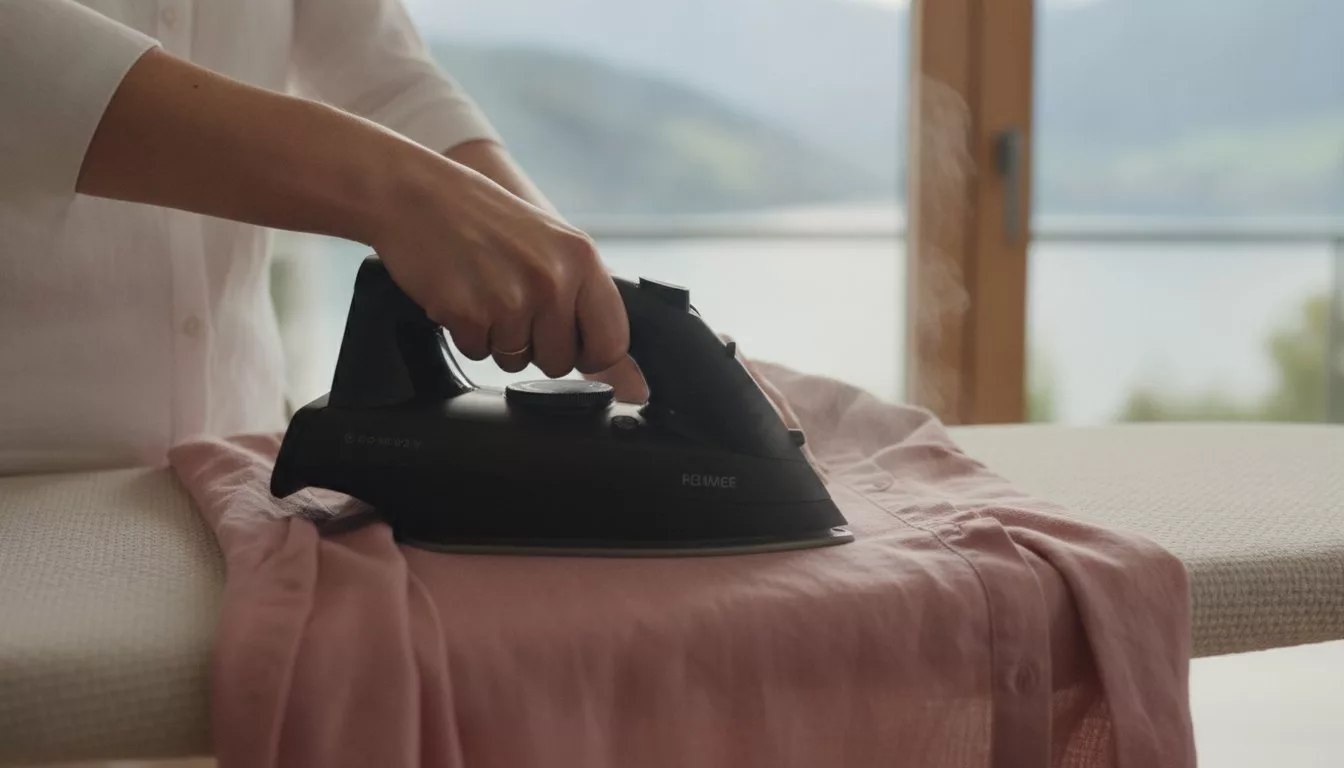
The correct technique does not involve dragging the iron with force, an action that would risk deforming the natural weave. On the contrary, you should accompany the fiber with firm but gentle pressure, always following the direction of the grain. For more structured garments, such as those found in our women’s fashion selection, the order of execution is essential. Always start with the smallest and double-layered parts, such as collars and cuffs, then move on to the sleeves and finally to the larger surfaces like the yoke and the main body. This method prevents already ironed areas from wrinkling while you attend to the more complex details.
Pure linen is an extremely resistant fiber that does not fear heat; in fact, it requires it to stretch completely. Most irons show a specific setting with three dots, which corresponds to approximately 200°C. This is the perfect temperature to act on the molecular bonds of the cellulose. If you encounter a particularly rebellious crease, do not hesitate to use a targeted burst of steam, but be careful if the garment is a linen blend. In the presence of silk or cotton, the temperature must be adjusted downward to respect the more delicate component of the blend, thus ensuring the longevity of the entire fabric.
A fundamental secret on how to iron linen, especially for darker or more vibrant tones, is to always work on the reverse side of the garment. This precaution prevents the unsightly “shiny effect” that direct heat can cause on surface fibers. Ironing on the inside also allows you to protect precious elements such as mother-of-pearl buttons or artisanal embroidery that make each piece unique. If you are faced with an extremely fragile detail, you can place a light and slightly damp cotton cloth between the iron and the fabric. This protective layer acts as a thermal shield, distributing heat evenly and protecting the artisanal soul of your wardrobe.
Every linen weave possesses its own soul and a specific density that requires a personalized approach. We cannot treat an ethereal summer dress with the same energy we dedicate to a runner with a generous and textured weave. Understanding the difference between lightweight linen, typical of clothing, and heavier linen, intended for the home, is the secret to elevating ironing from a simple duty to a true act of care. When you wonder how to iron linen to achieve that impeccable boutique look, the answer lies in the ability to adapt your gestures to the volume and function of the garment you have in your hands.
To refresh garments between uses, without having to resort to the ironing board every time, vertical steam is a precious ally. This technique allows you to smooth out small creases from sitting or movement simply by letting the moist heat penetrate the fibers while the garment is hanging. It is a quick gesture, almost a breath of freshness, that respects the vibrant nature of the fabric and allows you to wear your favorite pieces with renewed confidence.
Managing volumes is the main challenge when dealing with tailored pieces. For linen dresses with romantic lines, it is fundamental to start with the most complex details. If your dress features puff sleeves, work first on the inside of the shoulder and the cuffs, using the tip of the iron to navigate through the gathers. For long skirts, the trick consists in sliding the fabric over the board as you proceed, avoiding overlapping the already ironed parts. Remember never to iron over side seams if you want to avoid shiny marks; it is better to proceed in vertical sections, accompanying the natural fall of the fabric downward.
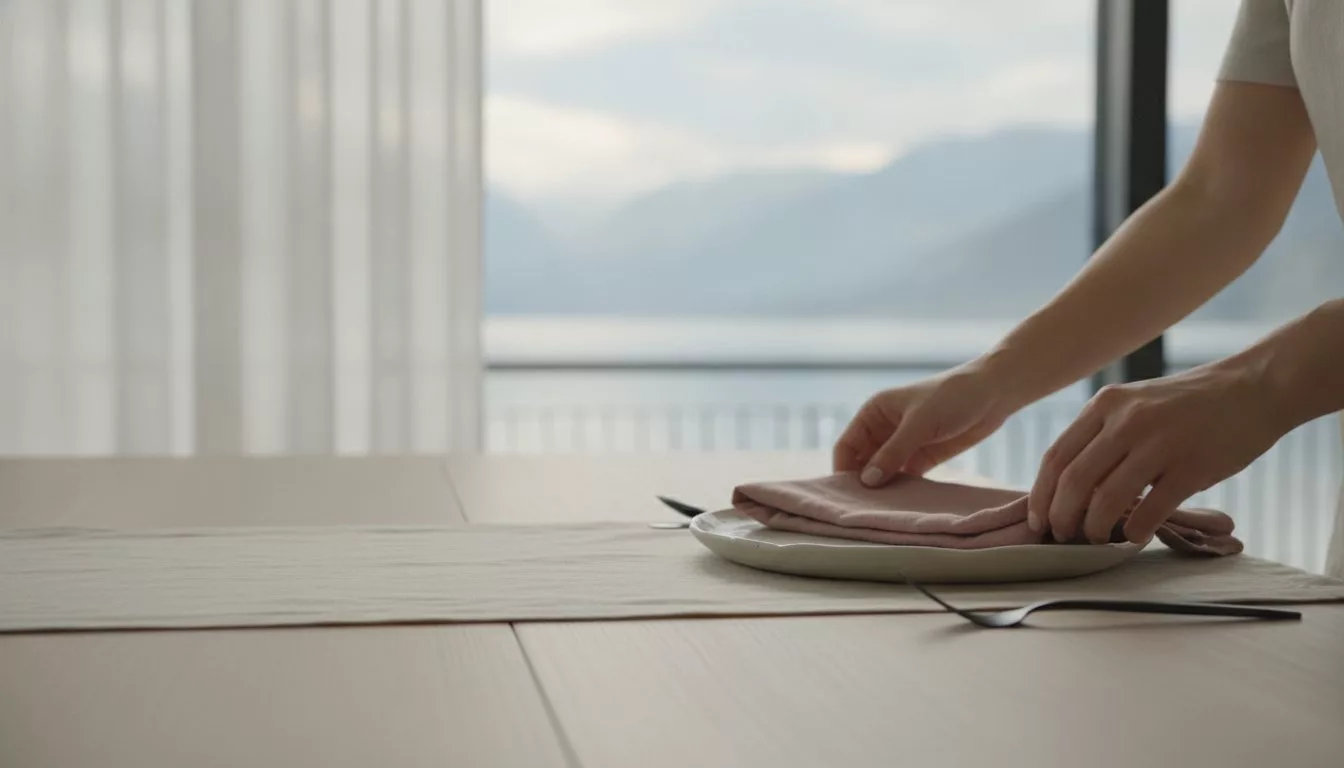
In the realm of home decor, linen often takes on a more robust and solemn consistency. To iron table runners perfectly, always start from the center and move outward with long, regular movements. This technique prevents the fabric from warping, ensuring that the runner sits perfectly flat on the table surface. Napkins, on the other hand, deserve almost geometric precision; iron them first on both sides and then fold them along a sharp line for a “boutique hotel” effect that will enchant your guests. If you wish for specific advice on how to treat a particularly precious fabric or are looking for the ideal solution for your wardrobe, you can always request a dedicated consultation to discover how to iron linen while preserving its original beauty.
The care ritual does not end with the last pass of the iron over the vibrant weave of the fabric. Once you have learned with dedication how to iron linen, it is fundamental to honor the time spent by dedicating the same attention to the resting phase of your garments. A common mistake, often dictated by haste, is to put away clothes or household linens while they are still warm. Residual heat acts as a plastic memory; if the fabric is folded or hung while still hot, the fibers will settle into new, unwanted creases, undoing all your effort. Let each piece cool completely in the air, allowing the cellulose molecules to stabilize in their perfect form.
To complete this sensory experience, I suggest scenting your wardrobe with natural essences that recall the purity of nature. Using small lavender sachets or an artisanal ironing water not only serves to refresh but transforms opening the wardrobe into a moment of authentic pleasure. Choosing delicate fragrances ensures that your linen is not only impeccable to the eye but also inviting to the touch and smell, creating a perfect harmony between your style and the environment in which you live.
The choice of how to store your treasures depends entirely on their structure and weight. More structured dresses and tailored shirts should always find a home on quality hangers, preferably in wood or covered in padded fabric. These materials offer the necessary support to avoid marking the shoulders and maintain the natural fall of the garment. Conversely, avoid thin metal hangers; their rigidity can deform the fibers over time. For trousers and table linens, opt for soft folds, avoiding crushing the fabrics too much against each other. Linen has a vital need to breathe; for this reason, it is essential to avoid plastic bags, preferring lightweight cotton covers that protect from dust without suffocating the natural fiber.
At Lighthouse Locarno, we firmly believe that true elegance lies in the quality of materials and the care we dedicate to them every day. Choosing an excellent garment means investing in a life companion that, if treated with the right love, will improve and soften over the years. I warmly invite you to discover our curated selection of women’s fashion, where each piece is chosen to reflect a philosophy of slow and conscious living. Should you have doubts about how to iron linen that is more delicate or if you wish for personalized advice on how to preserve the luster of your purchases, do not hesitate to contact me. It will be a pleasure to welcome you into my world and guide you toward a wardrobe management that is, first and foremost, an act of kindness toward yourself and the beauty that surrounds you.
Embracing the philosophy of linen means welcoming a slower and more conscious way of living, where every gesture becomes an expression of care for the beauty that surrounds us. We have discovered together how residual moisture is the true secret to awakening the fibers and how correct drying can radically transform the final result. Now that you have learned how to iron linen following the secrets of artisanal tradition, your garments will not only be tidy but will vibrate with a new light, ready to reflect your search for natural harmony.
Every piece of our 100% pure linen Made in Italy selection has been personally chosen by me to guarantee you a quality that evolves with you, wash after wash. We handle every shipment throughout Switzerland with artisanal dedication, so that the Lighthouse Locarno experience arrives intact at your home. If you wish to receive personalized advice on the care of your fabrics or want to discover how to integrate these noble fibers into your lifestyle, I will be happy to guide you in this discovery. Explore our collection of pure linen dresses and discover timeless elegance.
I strongly advise against ironing linen when it is completely devoid of moisture, as the cellulose fibers become excessively rigid and difficult to stretch. If you find yourself in this situation, spray the garment generously with demineralized water and let it rest for a few minutes so that the fabric regains its natural elasticity before proceeding with the hot iron.
If you notice a slight surface yellowing, you can try gently dabbing the area with a cloth soaked in low-concentration hydrogen peroxide or a solution of white vinegar and salt. It is essential to then carefully rinse the treated area. If, however, the fiber appears visibly blackened or carbonized, unfortunately, the damage is permanent; prevention through the right temperature always remains the best ally.
Certainly, you can achieve a pleasantly natural effect by hanging the garment while still wet on a shaped hanger in a humid environment, such as the bathroom after a hot shower. The heat of the water vapor and the force of gravity will work in harmony to smooth out the most evident creases, giving that “lived-in” and sophisticated look typical of an authentic and relaxed lifestyle.
The shiny effect is usually caused by a temperature that is too high applied directly to the surface fibers, a phenomenon particularly visible on dark colors. To avoid this inconvenience, always remember to iron the garment on the reverse side or to place a light cotton cloth between the iron’s soleplate and the fabric, thus preserving the noble opacity and original texture of your dress.
The ideal temperature for this fabric is around 200°C, usually indicated on the iron’s thermostat by the three-dot symbol. Knowing how to iron linen correctly means balancing this intense heat with an abundant and constant supply of steam, ensuring a deep smoothing of the fibers without compromising their strength or natural beauty over time.
For fabrics that have lost their original flexibility, the secret lies in deep and patient rehydration: soak the garment in lukewarm water and iron it while it is still very damp. This method allows the heat to penetrate the driest fibers, restoring their former grace and facilitating the removal of marks that seemed permanent.
The use of starch is recommended mainly for table linens or formal collars, where a more rigid and architectural structure is desired. For daily clothing, I suggest letting the fiber express its natural softness; excessive sizing could make the fabric less breathable and less pleasant to the touch, moving it away from its purest and most genuine aesthetic.
Steam itself does not damage dyes, but it is fundamental to use exclusively demineralized water to prevent limescale residues from leaving whitish halos or unsightly stains on vibrant colors. Clean and evenly distributed steam instead helps keep the fibers hydrated and luminous, ensuring that your garments maintain their chromatic intensity wash after wash.

True elegance is never measured by the number of silver utensils, but by the soul you manage to infuse into every detail of your home. Often, the…
Elegance is never a matter of rigid measurements, but of how a fabric manages to breathe together with the wearer. It is often thought that…